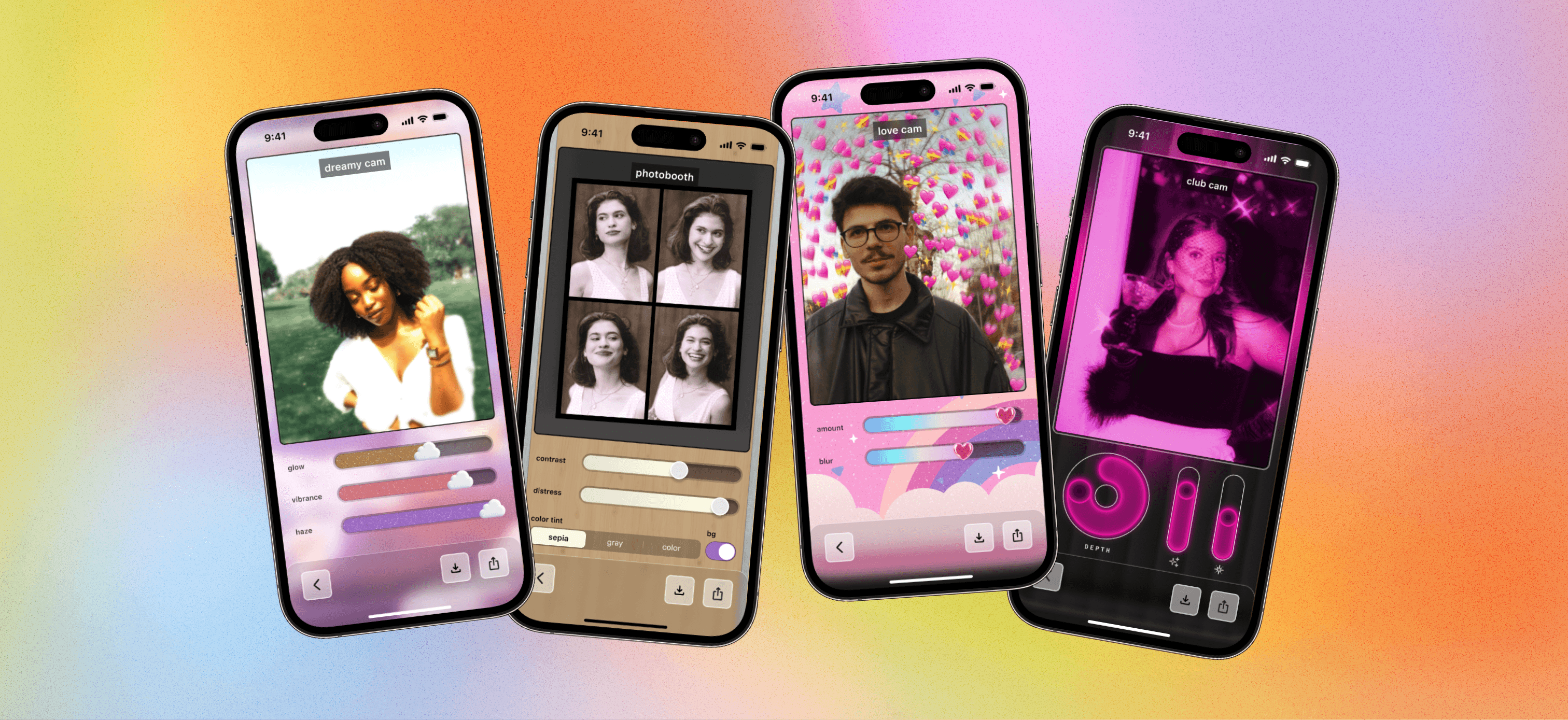
Sway - Trending Camera Effects
Turning Trends into Camera Effects
54.9%
Highest conversion rate
5
Camera launched
4 Months
Research to market
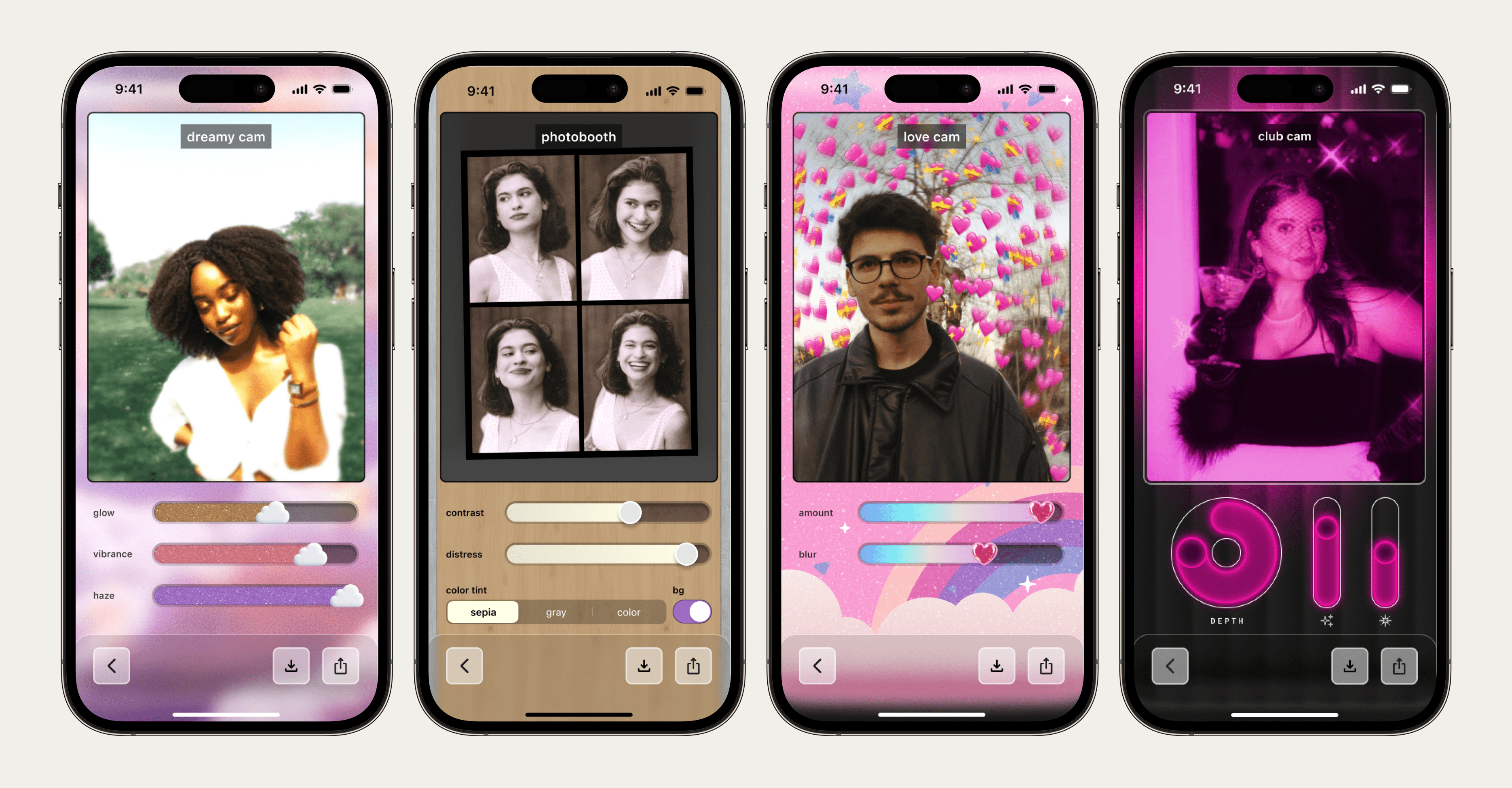
Final camera effects: Dreamy Cam, Photo Booth, Love Cam, Club Cam
The Context
Challenge
Gen Z users loved specific photo editing aesthetics like dreamy film looks, club lighting, and soft romantic tones, but achieving them required long tutorials and multiple apps. No one had packaged these trending effects into a simple, one-tap camera experience.
Approach
Combined market research, user interviews, and direct voting to prioritize which cameras to build. Created reference assets for engineering, iterated on effects through extensive playtesting, collaborated with a designer on the interface, and brought each camera to market through Meta ads, ASA, and ASO updates.
The Impact
Results
Launched five camera effects with strong conversion rates: LoveCam at 54.9%, ClubCam at 50%, and Dreamy at 41.5%. Drove 40K+ total downloads through targeted launch campaigns and strategic timing, including a Valentine's Day launch for LoveCam that became our highest-performing camera.
Case Study
Finding What to Build Next
way's entire product was camera effects, each one designed to turn a trending photo editing aesthetic into a simple, one-tap experience. The question wasn't whether to build more cameras. It was which ones to build and in what order.
I worked alongside our Product Manager to build a prioritization system that combined three inputs. First, market research: I spent time deep in TikTok, Pinterest, and Instagram studying which photo editing aesthetics were trending with our Gen Z audience. I followed tutorials, playtested competitor apps, and mapped out which looks were generating the most engagement. Second, direct user research: we brought users in and asked them to rank their favorite effects from first to last, giving us a clear signal on what they actually wanted versus what we assumed they wanted. Third, ongoing user feedback that helped us validate and adjust as we went.
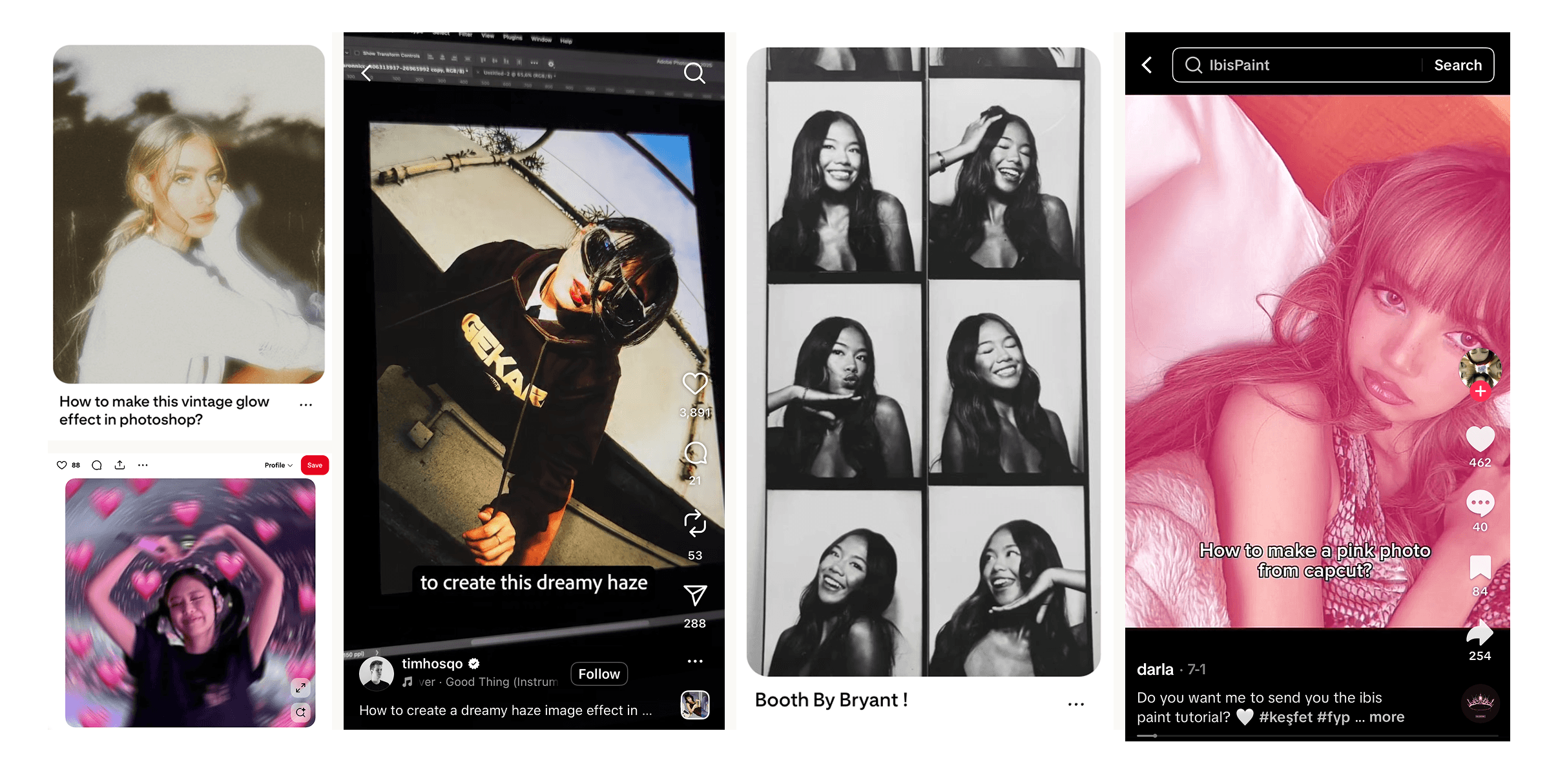
Popular photo-editing looks among Gen Z creators

Voting results from six participants across eight concept directions
That combination became the framework for every camera we prioritized. It wasn't guesswork. Every camera we built had demand signals behind it before we started development.
Getting the Effects Right
Identifying what to build was the easy part. Getting the effects to actually feel right was where the real challenge was.
I paired with two image processing engineers over the course of five months to develop each camera effect. My role was to bridge the gap between what users wanted and what engineering could deliver. I created detailed reference assets in Photoshop and Figma: mood boards, color grading examples, before-and-after targets that gave the engineers a clear visual benchmark to work toward.
From there it was an iteration cycle. They'd build a playtest version, I'd test it against the references and our user expectations, and we'd go back and forth tweaking until the effect matched the vision. Some cameras came together quickly. Others required dozens of rounds. The dreamy film look, for example, was deceptively hard. The difference between "dreamy" and "washed out" is subtle, and it took real precision to land it.
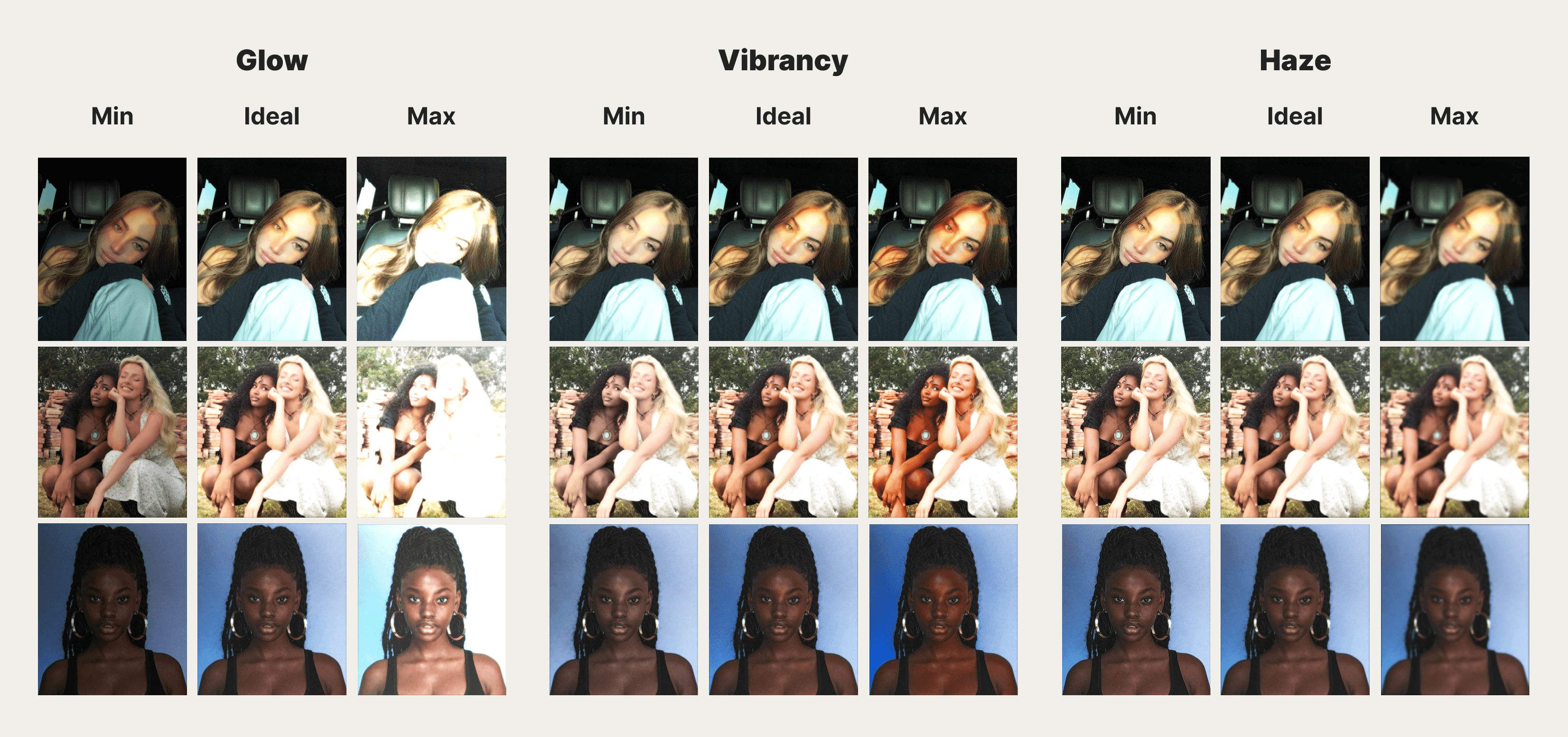
Play testing effect controls
Once the effects were locked, I worked with our product designer to design each camera's interface, making sure the look and feel matched the vibe of the effect itself and resonated with our Gen Z audience. Every camera had only three or four editing sliders, which was intentional. The whole point of Sway was simplicity. If users wanted 30 sliders, they'd use Lightroom.

EX. Dreamy cam UI conceptual ideation
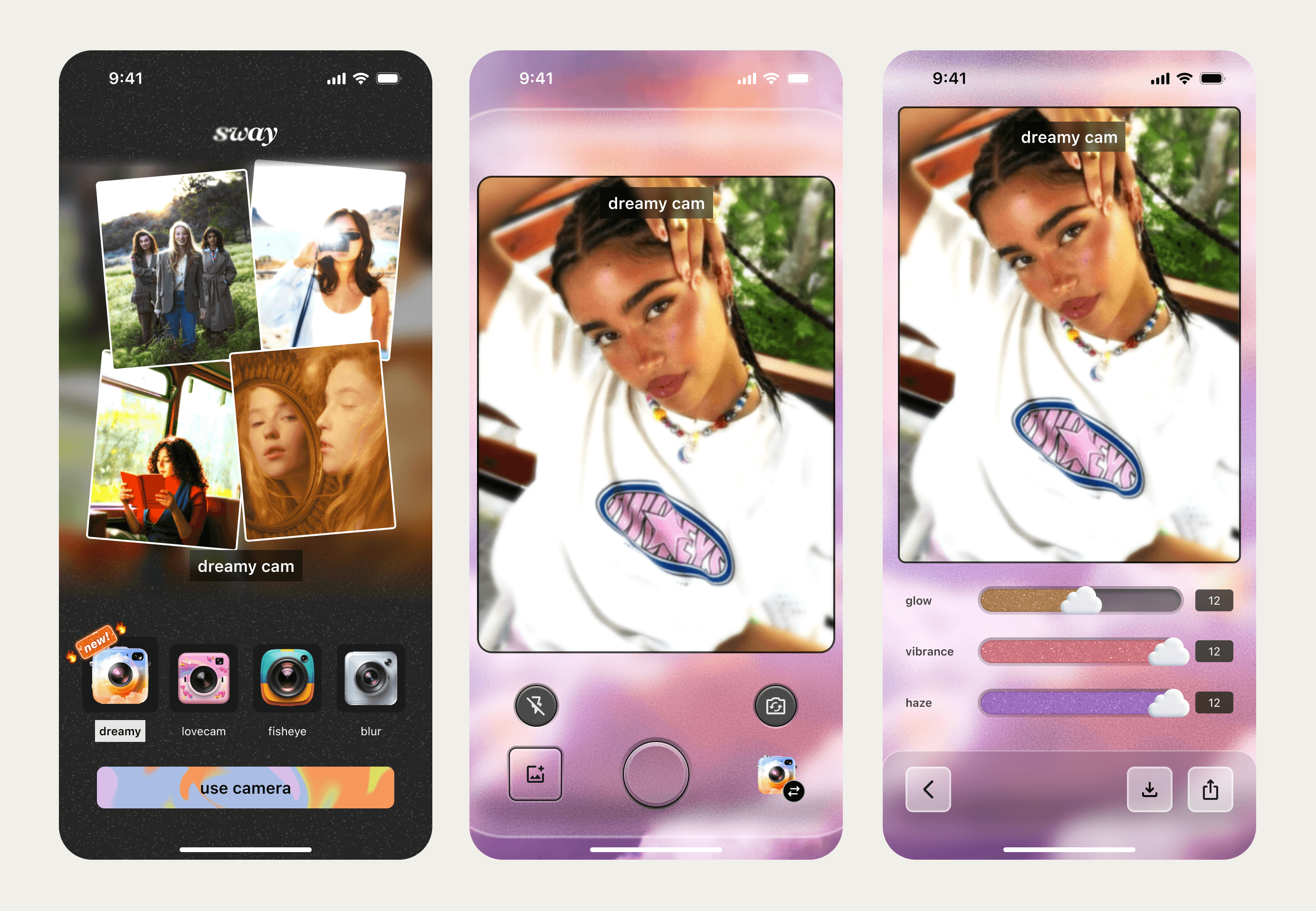
Dreamy Cam final UI designs
Bringing Each Camera to Market
Every camera launch was its own mini go-to-market. For each one, I built a Meta ad campaign with creative tailored to our Gen Z audience and that specific effect, updated our Apple Search Ads with relevant keywords, and refreshed the App Store screenshots and copy to showcase the new camera.
For LoveCam, I made a strategic call on timing: launching it during Valentine's Day to ride the seasonal wave of interest in romantic content. That one decision made it our highest-performing camera.
EX. Love Cam Ad
EX. Dreamy Cam Ad
EX. Photo Booth Ad
The Results
LoveCam led at 54.9% conversion, followed by ClubCam at 50% and Dreamy at 41.5%. Photobooth came in at 25%, which helped us understand which aesthetics resonated most and how to prioritize future cameras.
Conclusion
Key Takeaways
Prioritize with a system, not a gut feeling
Every camera we built had three demand signals behind it: market trends, user research, and direct feedback. That framework eliminated guesswork and meant we were building what users actually wanted, not what we assumed they wanted.
Strategic timing can be the difference between good and great
LoveCam and our other cameras were built with the same process, same quality bar, same launch playbook. The difference was launching it on Valentine's Day. That one timing decision made it our highest-converting camera. Distribution strategy matters as much as what you're distributing.
Simplicity is a feature, not a limitation
Three or four sliders per camera was a deliberate constraint, not a shortcut. Our users didn't want Lightroom. They wanted the end result without the learning curve. That product insight shaped everything from how we built the effects to how we marketed them.